Clean and safe drinking water is essential for maintaining good health. Unfortunately, water sources are often contaminated with harmful substances, including bacteria and viruses, that pose serious health risks. One of the most effective ways to ensure that water is purified and free from these pathogens is through the use of ultra filtration (UF) technology.
In this blog, we will explore how ultra filtration works, how it removes bacteria and viruses from water, and why it is a reliable method for ensuring the water we drink is safe and clean.
What is Ultra Filtration?
Before we dive into how ultra filtration removes bacteria and viruses from water, let’s first understand what ultra filtration is.
Ultra filtration is a type of membrane filtration technology used to purify water. It involves using a semi-permeable membrane with very fine pores to filter out contaminants from water. These membranes are designed to allow water molecules and small ions to pass through, while blocking larger particles like bacteria, viruses, and other microorganisms, as well as sediments, chemicals, and heavy metals.
Note: Need a trusted Ultra Filtration Water Purification supplier in Tanzania? We offer high-quality filtration systems that guarantee effective water purification. Reach out to Tamgo for top-notch solutions designed to suit your requirements and improve water safety.
Ultra filtration typically works with pore sizes ranging from 0.01 to 0.1 microns. This means it can effectively filter out particles that are larger than 0.01 microns, including many harmful microorganisms.
How Does Ultra Filtration Work?
Ultra filtration works through a simple yet effective filtration process that helps separate harmful contaminants from clean water. Here’s a breakdown of how it works:
1. Water Flow Through the Membrane
When water is passed through an ultra filtration system, it first flows through the membrane, which is designed to trap larger particles. The semi-permeable membrane is the core component of the filtration system, and it plays a key role in blocking contaminants.
2. Separation of Contaminants
As the water flows through the membrane, it is subjected to pressure, which pushes it through the tiny pores in the membrane. Smaller particles, such as water molecules, pass through the membrane, while larger particles, including bacteria, viruses, sediments, and other impurities, are left behind and discarded.
3. Clean Water Output
After the filtration process, the clean water that has passed through the membrane is collected, and it is ready to be used. The filtered water is free from harmful contaminants, including bacteria and viruses, making it safe to drink or use for other purposes.
This process makes ultra filtration a highly effective water purification method, especially for removing harmful microorganisms like bacteria and viruses.
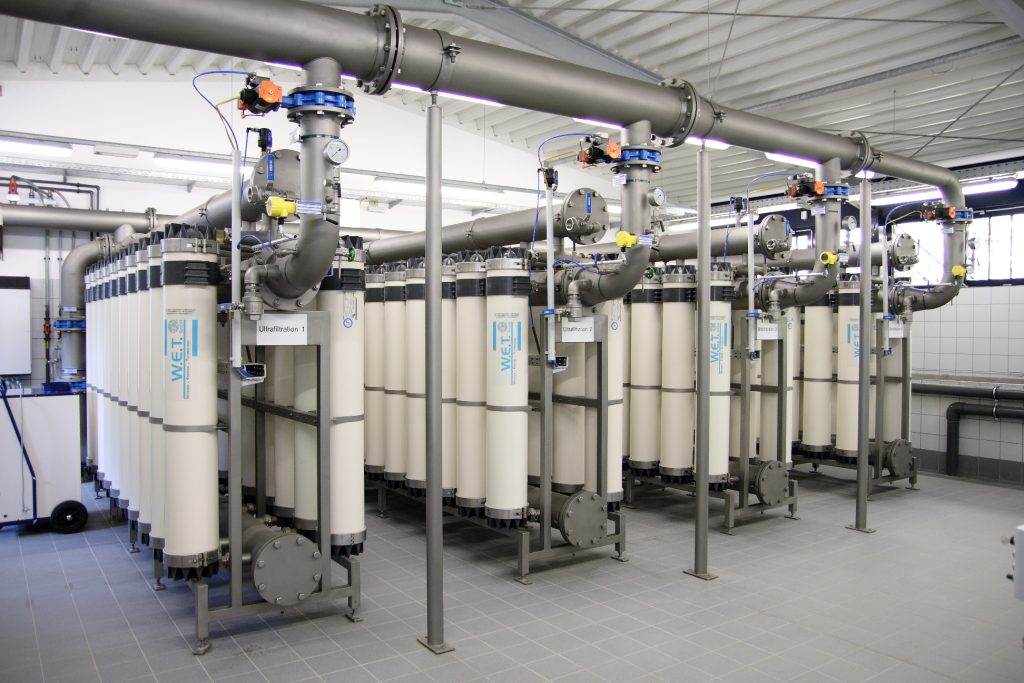
How Does Ultra Filtration Remove Bacteria and Viruses from Water?
Bacteria and viruses are among the most common contaminants found in water. They can lead to a variety of health problems, including stomach infections, gastrointestinal issues, and even more severe diseases. Ultra filtration is a powerful method for removing these harmful microorganisms from water, making it safe for consumption.
1. Size of Bacteria and Viruses
One of the main reasons ultra filtration is effective in removing bacteria and viruses is due to the size of these pathogens. Most bacteria range in size from 0.2 to 2 microns, while viruses are typically smaller, ranging from 0.02 to 0.4 microns.
Since ultra filtration membranes have pores that are smaller than the size of bacteria and viruses, they act as a barrier, preventing these microorganisms from passing through. The result is clean, purified water that is free from harmful pathogens.
2. How Bacteria Are Filtered
Bacteria are larger than viruses and can easily be filtered out by ultra filtration. As the water flows through the ultra filtration membrane, the bacteria are blocked by the small pores in the membrane, and they cannot pass through. The water that comes out of the filtration system is free from bacteria, ensuring that it is safe for drinking and other uses.
3. How Viruses Are Filtered
Viruses are smaller than bacteria, but ultra filtration can still effectively remove them from water. Although viruses can pass through some filtration systems, the fine pores of ultra filtration membranes are small enough to trap them. When water containing viruses passes through the ultra filtration system, the viruses are blocked by the membrane, ensuring that only clean, virus-free water is delivered.
While ultra filtration can remove many types of viruses, it’s worth noting that some smaller viruses may require additional filtration methods, such as reverse osmosis, for complete removal. However, ultra filtration is highly effective for removing most common waterborne viruses.
4. Additional Contaminants Removed by Ultra Filtration
In addition to bacteria and viruses, ultra filtration can also remove a wide range of other contaminants from water. These include:
- Sediments: Small particles of dirt, sand, and dust that can make water appear cloudy.
- Heavy Metals: Substances like lead, mercury, and arsenic, which can be harmful to health.
- Chlorine and Chloramines: Chemicals often used in municipal water treatment that can affect the taste and odor of water.
- Pesticides and Herbicides: Chemicals used in agriculture that can contaminate water supplies.
- Organic Compounds: Some organic substances, such as oils and chemicals, can also be filtered out.
This makes ultra filtration an excellent choice for improving the overall quality of water, not just in terms of bacteria and viruses, but for many other harmful substances.
Advantages of Ultra Filtration for Removing Bacteria and Viruses
Ultra filtration is a popular method of water purification for several reasons. Let’s take a look at some of the key benefits of using ultra filtration to remove bacteria and viruses from water.
1. Effective Microorganism Removal
Ultra filtration is highly effective at removing a wide range of microorganisms, including bacteria, viruses, and protozoa. This makes it a reliable solution for ensuring that the water we drink is safe and free from harmful pathogens.
2. Minimal Chemical Use
Unlike some other water purification methods, ultra filtration does not rely on chemicals to disinfect water. This makes it a more environmentally friendly option since it avoids the use of chlorine or other chemicals that can be harmful to both humans and the environment.
3. Preserves Essential Minerals
One of the advantages of ultra filtration over other purification methods, such as reverse osmosis, is that it does not remove essential minerals from water. The filtration process only removes contaminants, leaving beneficial minerals like calcium, magnesium, and potassium intact. This helps to maintain the natural balance of minerals in the water, which is important for your health.
4. No Need for Boiling or Chemicals
With ultra filtration, you don’t need to boil water or use chemical disinfectants to remove harmful bacteria and viruses. The filtration system does all the work for you, providing you with clean, safe water that is ready to drink immediately after it passes through the system.
5. Long-Lasting and Low Maintenance
Ultra filtration systems are durable and require minimal maintenance. The membranes can last for a long time, and the system only needs occasional cleaning and filter replacement. This makes ultra filtration a low-maintenance option for maintaining clean and safe water.
Is Ultra Filtration Suitable for All Types of Water?
While ultra filtration is effective for many types of water, there are some factors to consider when determining if it is the right choice for your needs. Ultra filtration works best in situations where the water is relatively clean, with few larger particles or contaminants. It is highly effective for removing bacteria, viruses, and other microorganisms but may not be sufficient for removing all types of dissolved chemicals, heavy metals, and salts.
For highly contaminated or hard water, additional treatment methods, such as reverse osmosis or activated carbon filters, may be needed to achieve the best results.
Conclusion
Ultra filtration is a highly effective and reliable method for removing bacteria, viruses, and other harmful contaminants from water. By using semi-permeable membranes with tiny pores, ultra filtration ensures that only clean water passes through, while larger particles and microorganisms are trapped and discarded.
With its ability to remove harmful pathogens without the use of chemicals, ultra filtration provides a safe and environmentally friendly solution for purifying water. It is a cost-effective and low-maintenance option for ensuring that the water we drink is free from harmful bacteria and viruses.
If you’re looking for a way to improve the quality of your drinking water, ultra filtration could be the perfect solution. It helps provide peace of mind by ensuring that your water is safe, clean, and free from harmful pathogens.
For More Insightful Articles Related To This Topic, Feel Free To Visit: eautocar.